












Orbital Survival

 Loading...
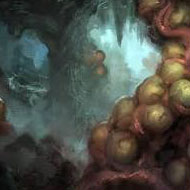









What’s actually left to scavenge once a space station has been drifting derelict long enough to attract hostile alien life? Orbital Survival builds its entire early game around answering that question one fragmented module at a time.
| Genre | Space Survival |
| Platform | Browser |
| Setting | Procedurally generated galaxy |
Scavenging a Procedurally Generated Galaxy in Orbital Survival
Each area in Orbital Survival is generated rather than fixed, which means no two runs through a given station or debris field lay out supplies and dangers in quite the same pattern. Fragmented space stations and floating wreckage form the core exploration spaces, and every module explored is a small gamble — crucial supplies and hostile alien species are both plausible outcomes of pushing into an unexplored section.
That unpredictability shapes how experienced players approach exploration. Rather than committing fully to a single station on sight, cautious probing of the first module or two before deciding whether to push deeper tends to separate runs that end in a stocked supply cache from runs that end in an ambush with nowhere to retreat.
Balancing Resource Management Against Combat
Orbital Survival splits attention between two constant pressures: gathering enough resources to keep a run viable, and staying alive against the alien species that inhabit the debris fields being scavenged. Resource scarcity: the design tension where every module explored risks combat exposure in exchange for supplies that are never guaranteed to be there.
Players who over-commit to combat, engaging every alien encountered rather than avoiding what can be avoided, tend to burn through resources meant for survival rather than conflict. The more consistent approach that shows up in player discussion is treating combat as a last resort tied to resource protection, not a primary activity in its own right.
What Beginners Get Wrong in Orbital Survival
New players commonly explore as far as possible on a single supply run, only realizing too late that the return trip through already-explored, already-depleted modules offers nothing useful if a fight breaks out along the way. Pacing exploration against a mental map of safe retreat routes matters more than raw distance covered.
Does exploring the same station twice yield the same layout?
No — Orbital Survival’s procedurally generated approach means supply and danger placement shifts between runs, so memorizing a specific station layout won’t carry over to future sessions.
Orbital Survival rewards caution over ambition, and the players who last longest tend to be the ones who treat every fragmented module as a question worth asking twice before committing to an answer.
Comments
There are no reviews yet. Be the first one to write one.