








Death Delivery

 Loading...






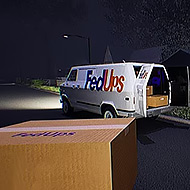
The garage door in Death Delivery does not close on its own, and that one detail is the entire game.
| Genre | Short Horror |
| Platform | Browser |
| Length | A few minutes |
| Protagonist | Alex |
A Text Message, a Garage Door, and Nothing Else
Death Delivery puts you in control of Alex, home alone late at night, just about to head to bed when a text from Mom arrives with a simple reminder: make sure the garage door is closed. It’s the kind of mundane errand that would take ten seconds in real life. In the game, it takes considerably longer, because something outside has other plans.
Movement is deliberately restricted — Alex can only turn their head slightly and press the button that raises or lowers the door. There’s no walking around, no exploring the house, no weapon or flashlight to manage. That narrow control scheme is the whole point: Death Delivery strips away every usual horror-game tool so the only thing left to manage is a door and whatever’s waiting on the other side of it.
The Thing With Red Hands and Feet
As the door rises and falls, a shadowy figure becomes visible just outside, marked by red hands and feet that stand out against the dark of the driveway. It doesn’t rush in immediately. Instead it lingers, shifts position, and seems to toy with Alex’s attempts to get the door shut — closer to a cat playing with something cornered than a straightforward jump-out threat.
That patience is what unsettles players more than a sudden attack would. Community reactions to Death Delivery consistently mention the pacing — the figure’s willingness to wait, reposition, and let the tension build before anything actually happens.
What Beginners Get Wrong About the Timing
New players tend to mash the door button as fast as possible, assuming speed is the safest option. That instinct isn’t necessarily correct — the figure’s movements seem to respond to what’s happening with the door, and rushing blindly can put Alex in a worse position than pacing the button presses more deliberately.
The other early mistake is looking away from the gap under the door too soon. Since head movement is so limited, missing the brief window where the figure is visible means losing track of exactly how close it’s gotten, which matters more in a game built around a single mechanical interaction than it would in something with more room to maneuver.
How long does a typical Death Delivery playthrough take?
Most runs last only a few minutes from the initial text message to the resolution, making it closer to a short-form horror experience than a full game session.
Is there more than one ending in Death Delivery?
The tension resolves based on how the player manages the door and the timing of their interactions with it, with the outcome tied directly to whether Alex closes the door before the figure closes the distance.
What’s the significance of the red hands and feet on the figure?
They’re the only clearly visible part of the entity against the dark driveway, functioning as the main visual cue players track to judge how close it’s gotten while the garage door is still moving.
Death Delivery works because it commits so hard to its one idea — Alex, a door, a text from Mom, and a figure with red hands and feet that never fully explains itself before the game is already over.
Comments
There are no reviews yet. Be the first one to write one.